
 July 30, 2025
India is steadily moving toward a more sustainable future. Its Sustainable Development Goal (SDG) score has grown from 57 in 2018 to 71 in 2023, showing progress in areas such as poverty reduction, access to clean energy, improved health, and education.
However, challenges remain in areas like climate action, biodiversity, and sustainable farming. To bridge these gaps, innovative ideas and community-led solutions are emerging across the country. One of the most inspiring examples is the recycling of temple floral waste, which was once discarded into rivers and landfills, creating pollution and waste.
From Waste to Resource
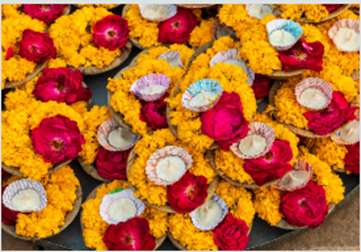
Temples across India, from Ujjain and Mumbai to Kanpur, Tirupati, and Hyderabad, generate thousands of kilos of floral offerings every day. In the past, most of these flowers were simply dumped, polluting waterways and adding to landfill waste. Today, many temples, communities, and businesses are collecting this floral waste and giving it a second life.
The flowers are being transformed into compost, incense sticks, natural dyes, soaps, seed-infused paper, briquettes, and even “fleather,” a plant-based material that feels and looks like leather.This approach not only prevents pollution but also supports livelihoods, especially for women and marginalized groups, who play a key role in collecting and processing the waste.
The Startups Leading the Way
A number of Indian startups have emerged as leaders in floral waste recycling, showing how innovation and tradition can work together:
- Phool (Uttar Pradesh): Collects over two tons of flowers every day. Converts them into charcoal-free incense, compost, biodegradable foam, and fleather, while employing hundreds of women.
- HolyWaste (Hyderabad): Works with more than 40 temples, processing about 200 kilos of flowers daily. Produces incense, soaps, fertilizers, and cones through its unique “FloRejuvenation” process.
- Yuvan (Una): Focuses on carbon-neutral organic incense and compost, made using flowers and essential oils.
- Esscent by Arpan: Uses dried flowers to create incense sticks, cones, and candles. Provides income to women and youth groups.
- Aaruhi Enterprise (Gurugram): Places flower collection bins at temples and has trained over 500 women to make eco-friendly products like dhoop, decorative pieces, and room fresheners.
- Nirmalaya (Delhi): Collects flowers from more than 300 temples and produces incense, dhoop, herbal dyes, and aromatherapy products while empowering women and promoting sustainable rituals.

Community and Government Initiatives
Beyond startups, many temple trusts, municipal corporations, and community groups are also finding ways to manage floral waste responsibly.
In Ujjain, the Mahakaleshwar Temple generates five to six tonnes of flowers daily. Under the Swachh Bharat Mission’s “Petals to Profit” program, this waste is collected and processed by a women’s self-help group, which converts it into compost, incense, and briquettes.
Mumbai’s Siddhivinayak Temple collects about 120 to 200 kilos of flowers three times a week. These flowers are repurposed into natural dyes for fabrics like scarves and tote bags, supporting local artisans.
Tirupati processes more than six tonnes of floral waste each day through a municipal incense-making unit, employing 150 women. Products are packed using recycled and plantable materials.
Many other temple committees are also setting up composting pits on their grounds, educating devotees about not dumping flowers into rivers, and promoting “Green Temples” that use biodegradable or even digital offerings.
A Path Forward
By turning something as simple as discarded flowers into useful products, India is proving that sustainability can grow from its own traditions. These efforts do more than clean rivers and reduce waste. They create livelihoods, empower women, and bring new life to local economies. Flower waste, once seen as a problem, is now becoming a resource that can power India’s journey toward a cleaner, greener, and more sustainable future.